“We embrace the wear, the rust and the fade.”
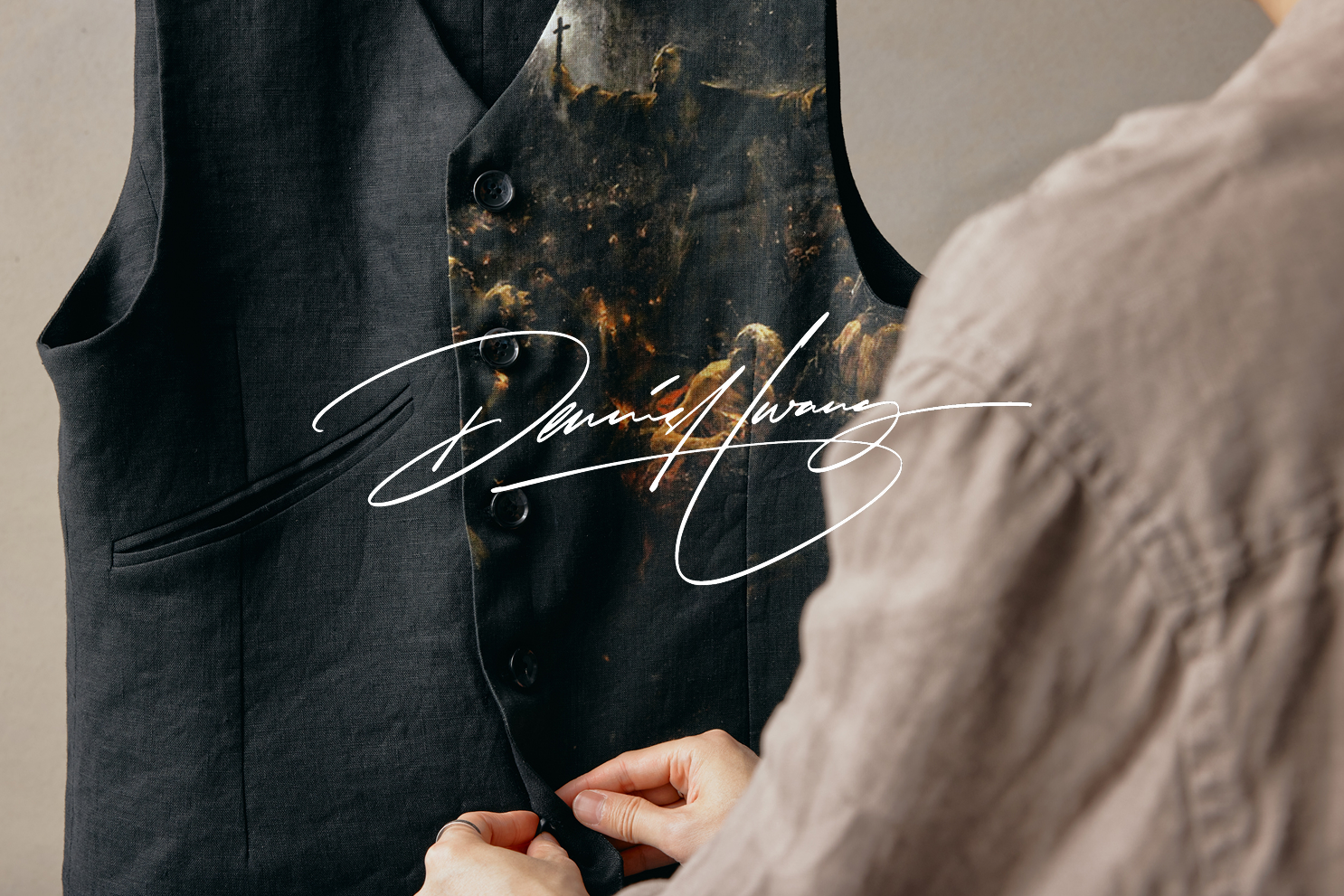
We live in a world that constantly reminds us of where we should be, what we should have accomplished, and who we should have become by a certain age. Somewhere along the way, we begin to measure our lives against timelines that were never really ours to begin with. We celebrate the finished product, the success stories, and the moments of achievement, but rarely pay attention to the years of uncertainty, experimentation, and change that made them possible.
But what if those years weren't time lost? What if the things that didn't work out, the paths we took, and the experiences that seemed unrelated were all part of becoming who we are?
Perhaps the same can be said about the objects we surround ourselves with. We are so accustomed to associating newness with value that we often overlook the beauty of things that have lived a little. A faded surface, a crease, or a carefully repaired garment can tell us more about its history than something untouched ever could.
Founded by Dennis Hwang, Alchemilla Artifacts explores the relationship between art, memory, and time through garments that are not simply made to be worn, but to evolve with the people wearing them.
Yet beyond the clothing lies a much more personal story about finding your way, questioning the life you've built, and having the courage to make room for something different.
Because sometimes, the most meaningful things in life are the ones that take time to become.
FS#5: Take us back to the moment this brand started.
DH: There was no single dramatic moment when Alchemilla Artifacts began. It developed gradually through different parts of my life that, at the time, did not seem connected.
Over time, I became increasingly drawn to clothing as a form of storytelling. I learned the foundations of sewing and began constructing early prototypes of garments I had imagined. Being able to take something that existed only in my mind and give it a physical form was an important turning point. Those first prototypes were imperfect, but they allowed me to understand proportion, fabric, and construction in a much more direct way. They also gave me a clearer language for communicating my designs to the skilled makers who would later refine and produce them.
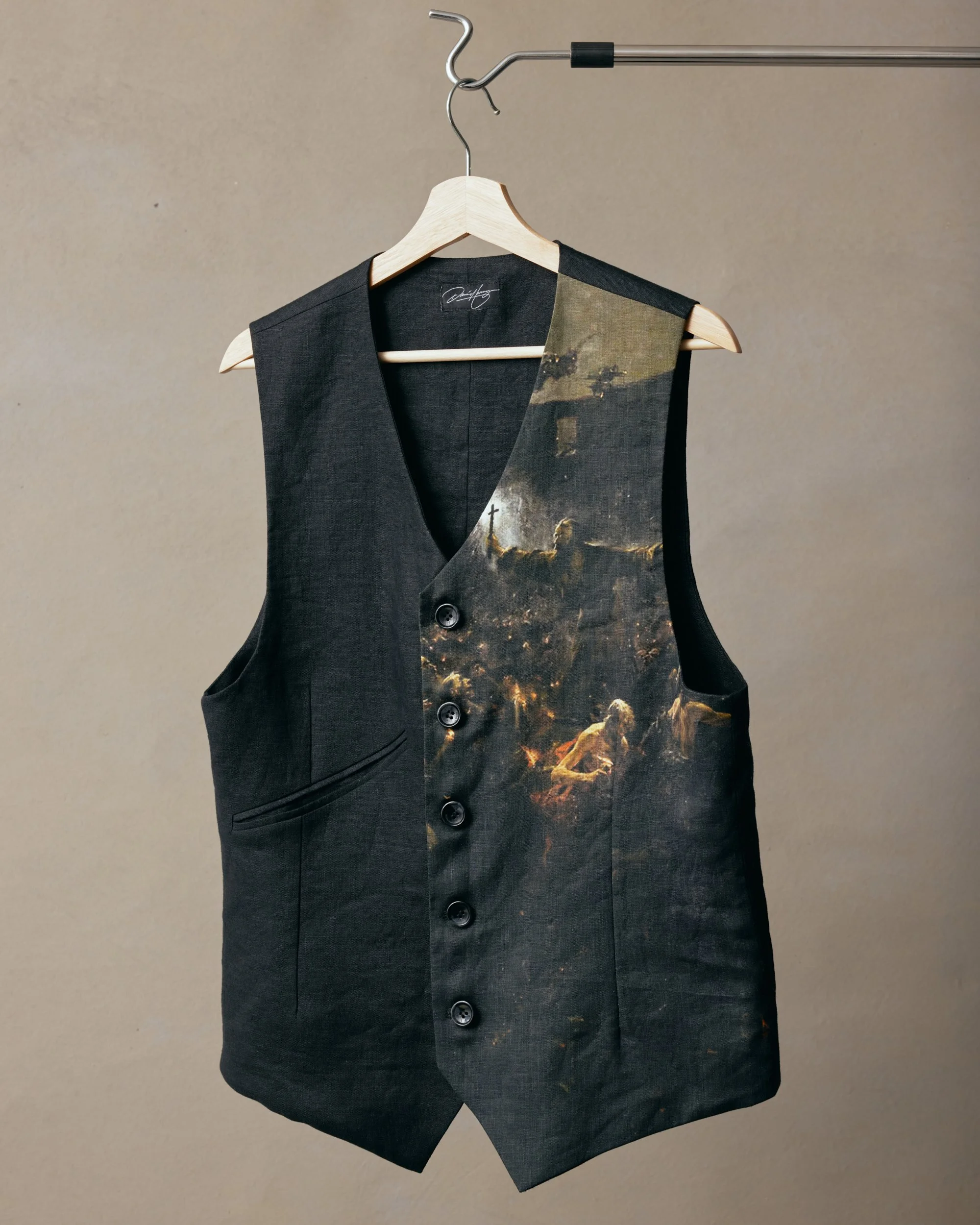
Alchemilla Artifacts grew from that process. I wanted to create garments shaped by historical art, natural materials, and the traces that time leaves behind. I was not interested in building the brand around conventional seasonal collections or the pressure to continually produce something new.
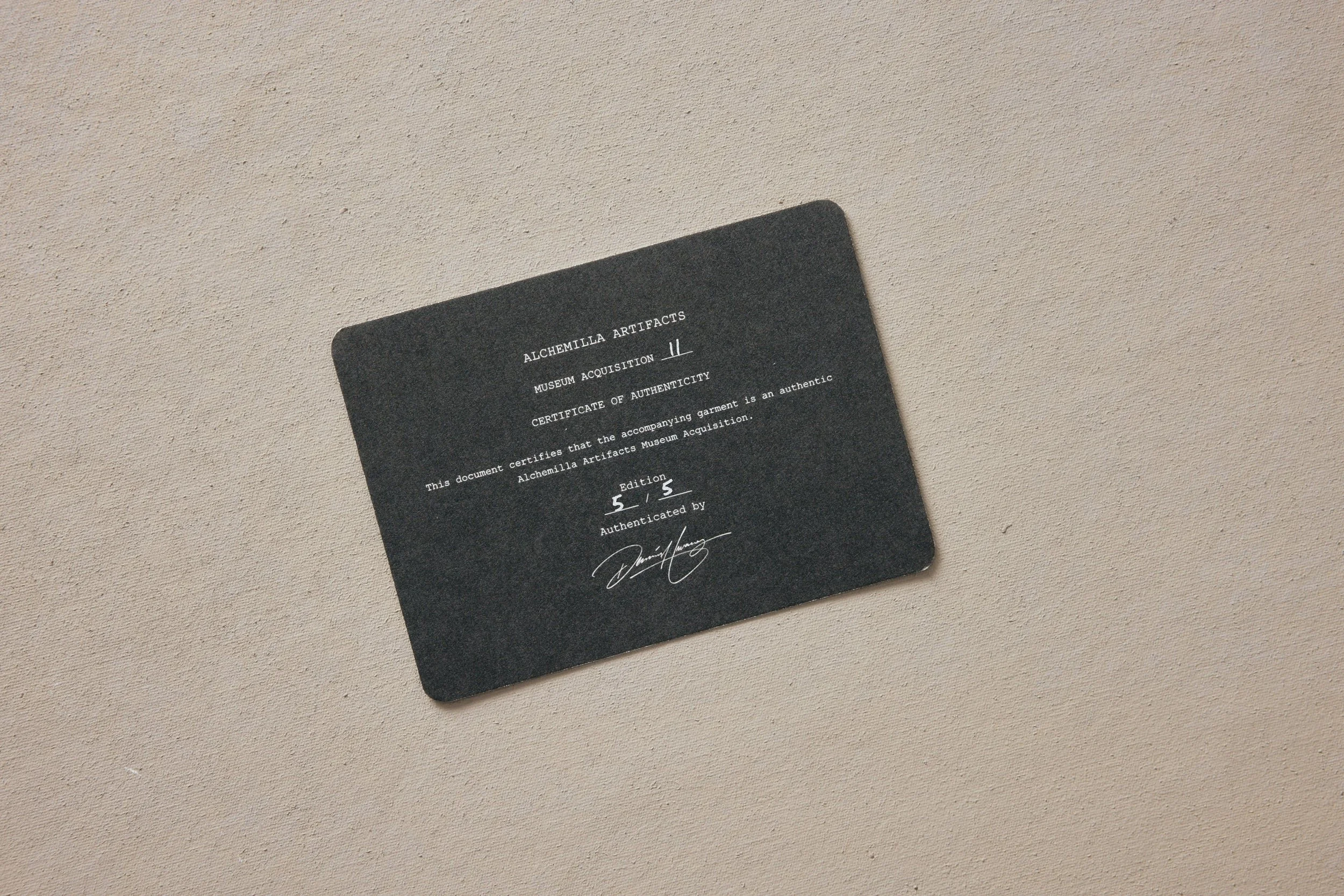
Instead, I wanted to work slowly and release individual Museum Acquisitions only when there was a meaningful reason for them to exist.
At its core, I started Alchemilla Artifacts to create clothing that could hold art, memory, and evidence of time—garments designed to be worn, softened, repaired, and given a history of their own.
FS#5: Was there a specific frustration, gap, or feeling you were trying to respond to?
DH: One of the greatest frustrations was how financially difficult it is to bring an independent garment into the world with care. Before a piece can ever be sold, there are significant costs in sampling, pattern development, fabric sourcing, printing, construction, photography, and presentation. As a new designer without an established sales history, much of that investment has to be made before knowing whether anyone will respond to the work.
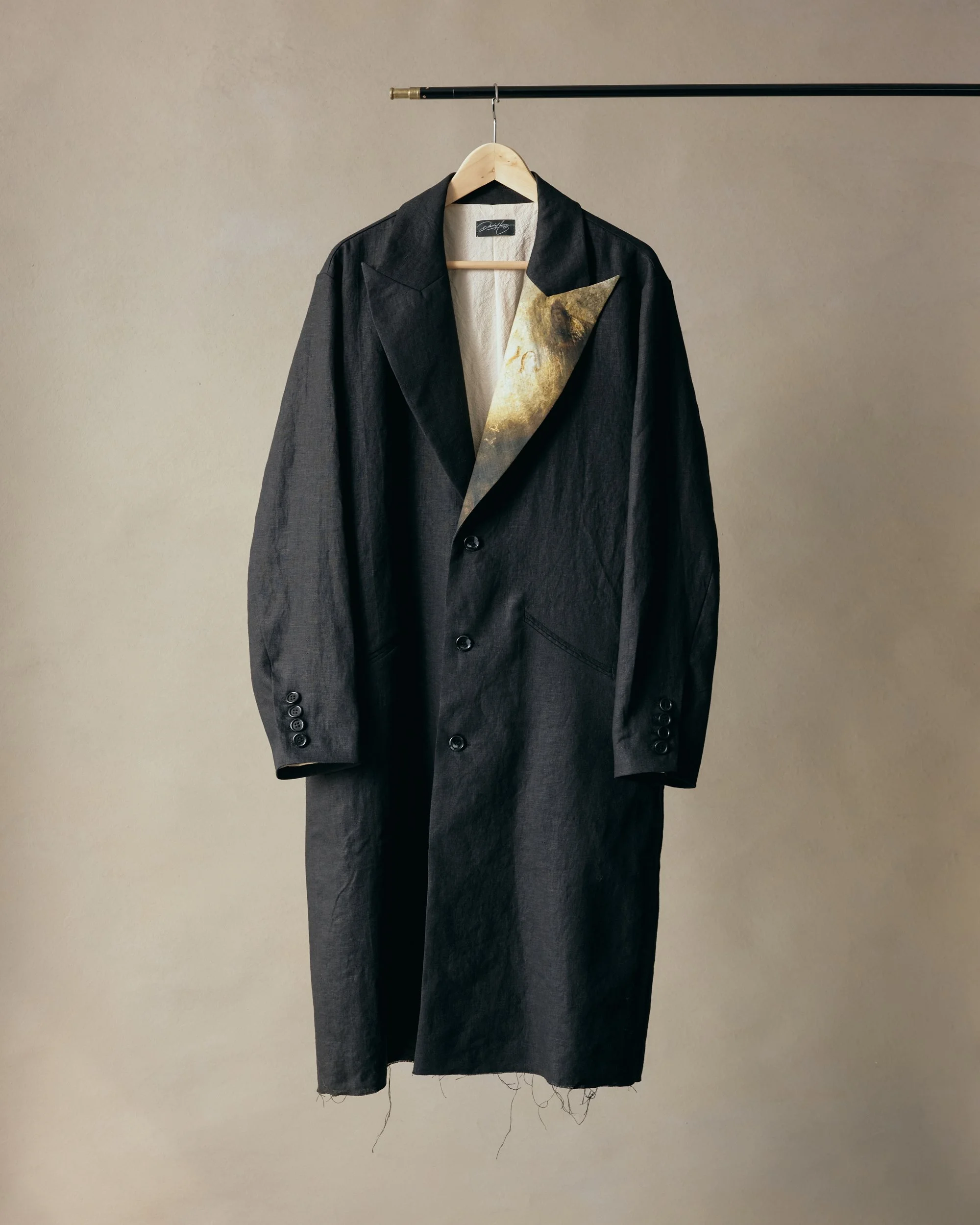
There was also a creative gap I was responding to. I wanted clothing that carried the atmosphere of historical art and aged objects without feeling theatrical or overly decorated—garments that were expressive, but still quiet enough to become part of someone’s life. I did not want artwork to be placed on clothing simply as a graphic. I wanted the artwork, material, silhouette, and construction to feel inseparable.
FS#5: What does your brand stand for, beyond the product?
DH: Beyond the garments, Alchemilla Artifacts stands for the belief that meaning can be created slowly—and that a life does not need to follow a conventional path to become meaningful.
My own path into design was indirect. I spent many years in a field that appeared stable from the outside, while privately feeling disconnected from the life I was building. The brand came from choosing to listen to that discomfort and make room for a different part of myself. In that sense, Alchemilla Artifacts represents transformation: not the sudden reinvention of a person, but the gradual process of becoming more honest about what matters to them.
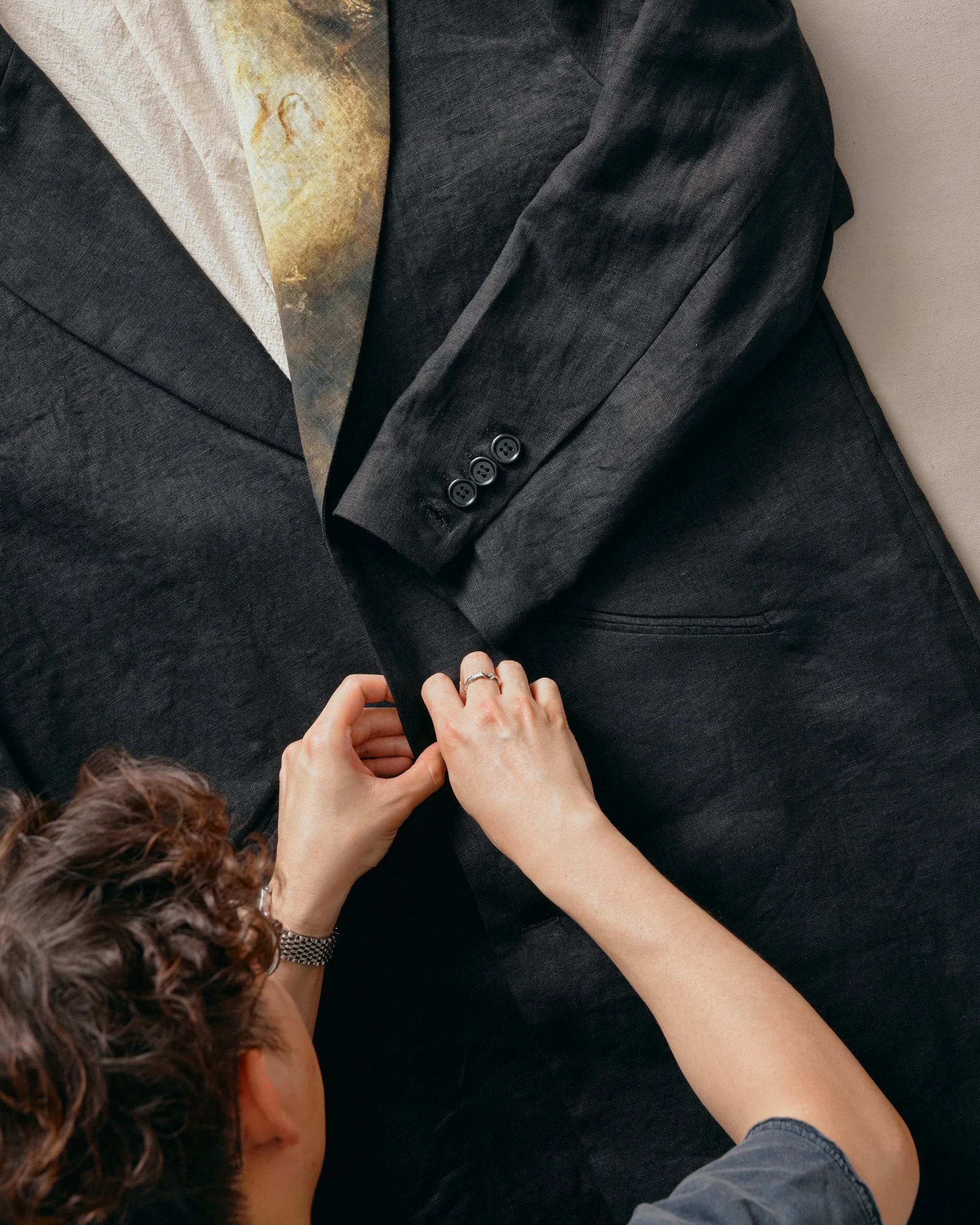
The Museum also stands for a more considered relationship with clothing and the objects we live with. We are often encouraged to replace things as soon as they show age, but I believe wear can deepen an object’s meaning. A crease, a faded surface, or a careful repair records the life that has passed through it. These changes are not something to disguise; they are what make an object personal.
There is also a respect for the people and processes behind each garment. Working slowly, producing in limited numbers, and acknowledging the hand of the maker are ways of resisting the idea that clothing should feel immediate, anonymous, or endlessly replaceable.
Ultimately, Alchemilla Artifacts stands for preservation—not keeping something untouched, but allowing art, craft, memory, and material to continue living in another form.
FS#5: What kind of person are you designing for — and what do they feel when they wear your pieces?
DH: I design for someone who is thoughtful and quietly individual—someone drawn to art, history, and craftsmanship, but who does not need clothing to announce who they are.
When they wear an Alchemilla Artifacts piece, I want them to feel composed, distinctive, and connected to something with depth. The garment should feel personal, as though it was discovered rather than simply purchased, and become more their own with time.
FS#5: What are you currently working on or moving towards?
DH: I am currently developing the next Museum Acquisitions and researching paintings that speak to me beyond their immediate beauty—works that hold a particular sense of memory, atmosphere, or time.
I am taking my time with the process, allowing each artwork, material, and silhouette to develop naturally rather than working toward a fixed release schedule. Slow fashion, to me, means creating only when there is something meaningful to contribute.
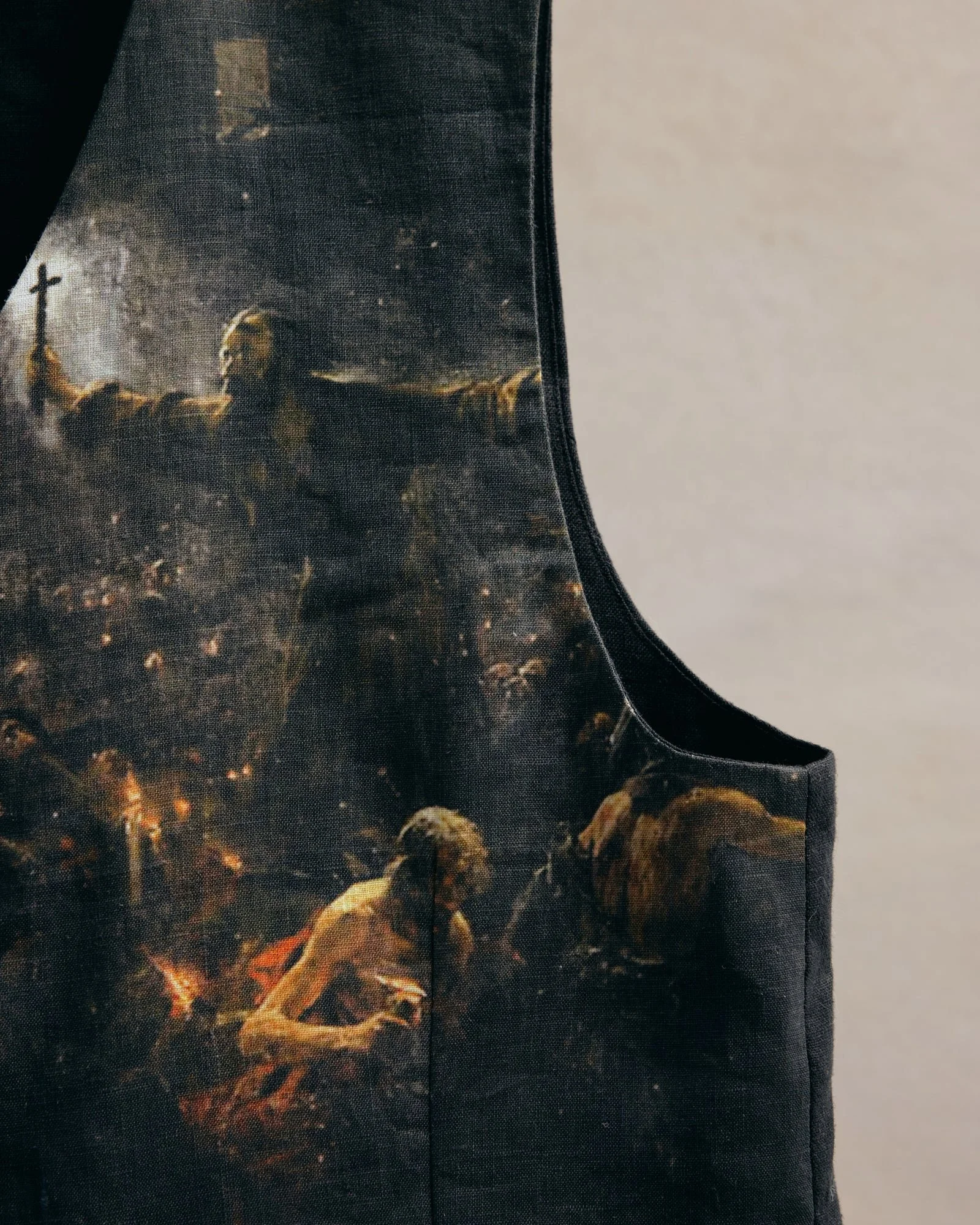
Selected fragments of these paintings will become traces of another time, carried forward through cloth and given a new life through wear.
FS#5: What inspired it — not just visually, but emotionally or conceptually?
DH: “…sense of gradual discovery is central to Alchemilla Artifacts. I want the garments to hold a similar anonymity and mystery—to be felt before they are fully understood. From a distance, someone may first notice the material, silhouette, or a fragment of colour. Only through closer attention do the artwork, construction, and meaning begin to reveal themselves.
By preserving only fragments of the paintings, I am not trying to explain them completely. I want each garment to carry a trace of another time and invite the wearer to look further. That is also how I hope the Museum is experienced: quietly, slowly, and with more to discover beneath the surface.
FS#5: What part of the development or production process surprised you the most?
DH: What surprised me most was how straightforward the studio made the process feel. Translating an early prototype and an idea in my mind into a professionally finished garment initially seemed daunting, but the communication and development process felt natural and collaborative.
I had worked with other studios before, so I already had a point of comparison. This experience stood apart. Having also worked in menswear and spent considerable time around tailored clothing, I have developed a critical eye for construction and finishing. The studio’s craftsmanship genuinely impressed me—from the precision of the tailoring to the care given to details that many people may never see.
The finished garments preserved the character of my original designs while bringing them to a level of refinement I could not have achieved alone. Of the studios I have worked with, this Fashion Studio No.5 has been the clear standout.
Final Thoughts
Transformation doesn't always happen overnight. We often put so much pressure on ourselves to know exactly where we're going that we forget how much we learn along the way.
We tend to see uncertainty as a setback, changing directions as a failure, and time spent exploring as time wasted. But sometimes, the experiences that seem unrelated become the foundation of something meaningful.
Much like the garments Alchemilla Artifacts creates, we collect stories, experiences, and imperfections that shape who we become.
So, if there's something you've been wanting to pursue, perhaps you don't need to have it all figured out before you begin. Give yourself permission to explore, make mistakes, and grow at your own pace.
After all, meaningful things take time. And every story has to start somewhere.
Perhaps yours is next.